

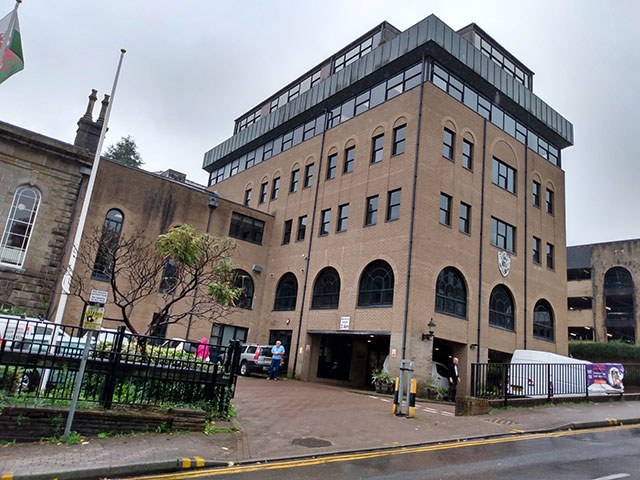
A GWENT council loaned £15 million to authorities in England and Scotland last year while also borrowing from its counterparts.
The loans, described as investments and which are paid back with interest, are a form of managing surplus funds before they need to be spent by Torfaen Borough Council.
The councils which took out loans from Torfaen during the past financial year were West Dunbartonshire north west of Glasgow, Bournemouth, Christchurch and Poole Council on England’s wealthy south coast and Blackpool Council. Each council borrowed £5m from council taxpayers in Torfaen.
It is the second successive year finance chiefs at Pontypool’s Civic Centre have granted a £5m loan to their counterparts in the Lancashire seaside resort, famed for its 132-year-old, and 158 metres tall, tower.
Torfaen council’s head of financial services Robert Green told its governance and audit committee: “We borrow from some local authorities and we lend to some local authorities as well as other bodies and products such as money market funds.”
The loans are made to ensure the council meets its minimum investment level for professional trading status, which Mr Green said gives its access to better borrowing products, and “to always make sure we’ve always got cash should we need it.”
The 12-month £5m loan to West Dunbartonshire was at 4.25 per cent interest, while Blackpool had a 4.20 per cent interest rate on its three-month loan with council taxpayers in Bournemouth, Christchurch and Poole having to pay 4.66 per cent interest on its six-month loan.
Total interest received and accrued during 2025/26 was £1.434m which Mr Green said was down from £1.727m in 2024/25 but he reminded the committee that interest rates are lower than they were last year.
At the end of the financial year in March the council’s investment return on a weighted average method was 4.60 per cent, down from 5.07 per cent in 2024/25.
His report detailing the council’s treasury management during the past financial year stated: “Torfaen’s investment return compares favourably with the average seven-day Sterling Overnight Index Average (SONIA) rate of 4.011 per cent, which is a recognised industry benchmark.”
Mr Green also described Torfaen as having taken out “substantial loans” from other local authorities which he said are at rates typically lower than other forms of borrowing.
It borrows from other councils to address an “under borrowing position” caused by it using its own cash to fund some spending projects which Mr Green said is known as “internal borrowing” and is currently the cheapest form of borrowing.
Though it means the council runs down its own cash balances, and isn’t able to earn interest by investing those funds elsewhere, it makes a saving as it avoids costly external loans.
The council’s approach is to avoid long-term loans at a time of high interest rates.
The council’s total external debt reduced at the end of the 2025/26 financial year to £123.437 million, from £131.626m in March 2025. The debt is divided between loans from the UK Government PWLB, which have the lowest interest rate and account for the largest balance on its books, market loans over 30 years and temporary in year borrowing from other local authorities.
The council paid £4.8m in interest on its loans during the past financial year. The debt is used for long-term costs and new projects with all councils legally required to set a balanced budget each year, with outgoings matched by money coming in.
The council didn’t breach its £150.728 million external debt limit, which would require approval from the council, at any time during the year or its “operational boundary” for day-to-day treasury management.