

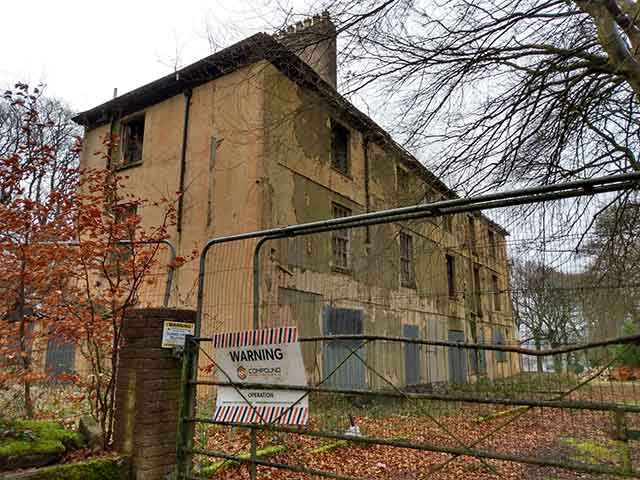
THIS former mansion house – that has most of its roof missing – was just four years ago being considered for redevelopment as a five-star boutique hotel.
The grade II-listed house was built nearly 230 years ago but it’s feared it could collapse before it reaches that milestone in 2028.
While most of the roof has caved in what remains is either rotting wooden frames or precariously balanced slate while peeling paint, cracked mortar and boarded up windows signify the house has long since passed the stage of minor repairs.
Viewed from behind it can also been seen where walls have collapsed, or fallen away, and its internal timber structure exposed.
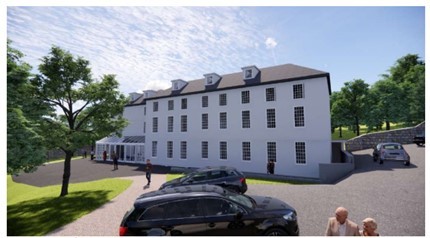
It was hoped a £19 million redevelopment could bring Ty Mawr, which translates as Big House, back to life as a hotel but a bid for UK Government funding, in 2022, was unsuccessful.
Since then the house, which is privately owned and opposite Blaenavon’s World Heritage Centre, has been rotting away behind a steel fence and a sign warning ‘Dangerous Buildings Keep Out’ along with the usual reminders that security and CCTV monitoring is in place.
Nick Horler, independent councillor for Blaenavon, highlighted concern at the condition of the building, also known as Blaenavon House at Torfaen Borough Council’s most recent meeting.
He described the house as “an integral part” of Blaenavon’s World Heritage status, awarded by United Nations body UNESCO in recognition of the town’s importance to the development of the iron and coal industries, and said it is held in the “memories of many residents”.
Cllr Horler said while many residents may not be aware the property is privately owned, he asked the council for an update on short-term and long-term plans, for it.
Joanna Gauden, Torfaen Borough Council’s cabinet member for the economy, said the council shortly expects to receive an update on the condition of the building after a grant was awarded from Welsh historic buildings body Cadw.
She said: “The council previously worked with the private owner of Blaenavon House / Ty Mawr to bring forward proposals for a five-star boutique hotel. A Levelling Up Fund application was submitted to the UK Government in 2022 to fund this aspiration, but unfortunately that was unsuccessful.
“In the meantime the council has secured Cadw grant funding to update the structural survey, the condition survey, of the house which was previously undertaken as part of the Levelling Up Fund application process. We anticipate we will receive the results of this survey by early April.
“This report will assess the current condition of the building and recommend any urgent works that are required to retain the building and protect it from any further deterioration and the report will also be used to help inform what further options will be available going forward.”
Cllr Gauden said Ty Mawr is recognised as a “key priority” in Blaenavon’s placemaking plan – which is intended to guide regeneration efforts – and in the World Heritage management plan and said: “Officers remain committed to ideas that bring forward viable proposals for redevelopment of the site.”
‘Fall down’
Cllr Horler said he was “sure” residents would welcome the response and commitment to the building “that will shortly fall down because it is in such a mess.”
Ty Mawr was built for ironmaster Samuel Hopkins in 1798 and remained in the ownership of the Blaenavon iron company and used as a base for directors during the summer grouse hunting season during the Victorian period as well as a family home for directors and managers.
In the 1920s it became the base for the Blaenavon Medical Aid Society, a forerunner of the NHS, and was used as the town’s hospital until 1980 when it became a residential home, the Beeches Nursing Home, which closed in 2006.